
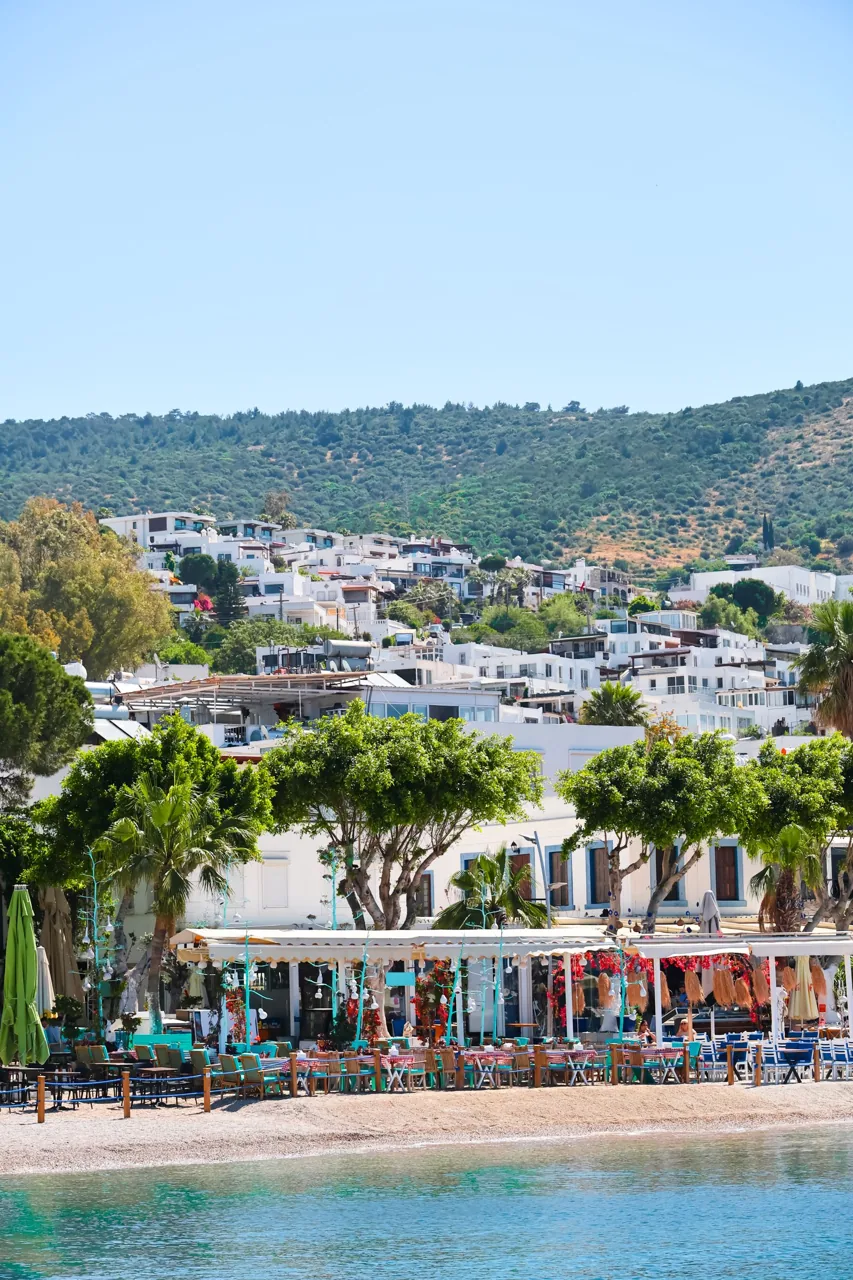
Datça sits at the end of a long, thin finger of land reaching west into the sea, far enough from the nearest airport that the coach tours never quite bother. That distance is the whole point: while Bodrum and Marmaris grew loud, Datça stayed a place of stone houses, almond groves and quiet coves, and the people who love it are quietly glad it is a bit of a drive.
The peninsula has two Datças. Old Datça (Eski Datça) is the original village inland — cobbled lanes, bougainvillea, a handful of good restaurants and the writer's-retreat calm that drew poets here for decades. Down on the water, Datça town is the working harbour: the marina, the ferry, the market on Saturdays, and the everyday life of a small Turkish town that happens to have turquoise water at the end of every street.
Getting your bearings is simple once you understand the shape. One road runs the length of the peninsula from the mainland out to the tip at Knidos, and almost everything worth seeing hangs off it — a village here, a cove there, a viewpoint where the two seas meet. You do not so much tour Datça as drift along it. Turkey's official tourism board has a useful overview of the wider region if you want the map in your head before you come.
What to expect, and what not to. Expect long lunches, warm sea into October, and prices gentler than the famous resorts. Do not expect nightclubs, water parks or a strip — that is not what survived out here. The rhythm is slow on purpose, and the visitors who are happiest are the ones who lean into it rather than fighting it.
A first visit rewards a week. Three or four days to settle into a base, wander the villages and find your beach; the rest to do very little at all, which in Datça is not wasting time but rather the entire idea. Come with a loose plan and a good book, and let the peninsula set the pace.